The Best Dynamic Microphones
How we picked: we weigh the strongest independent expert reviews, real manufacturer specs, and thousands of verified owner reviews, then name one clear pick per budget and use case. No fake lab tests, and we say plainly what we’d skip. Prices change, so we link out for today’s. Last checked 2026-07-30.
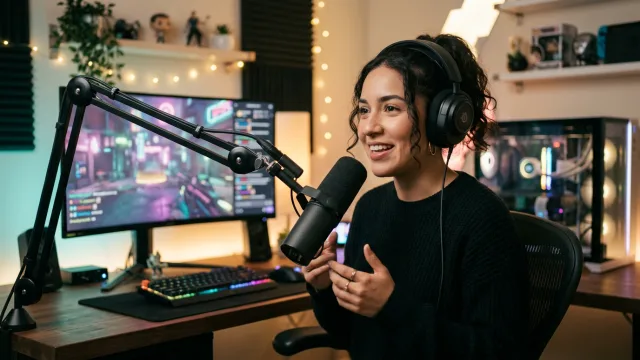
A dynamic microphone is the answer to the most common recording problem there is: you are not in a studio. Dynamics are far less sensitive than condensers, so they capture your voice from a few inches away and largely ignore the room behind it — the air conditioning, the keyboard, the traffic, the echo off a bare wall. That is why almost every podcast and radio station you have heard uses one. Here are six worth owning, from a $60 workhorse to the mic that has been on stage for fifty years. Before you buy anything, it's worth reading <a href="/why-your-microphone-sounds-bad">why your microphone sounds bad</a> — most audio problems are free to fix.
 🦉 #1 PICK
Shure MV7+
Broadcast sound with none of the SM7B's hassle.
The 6 top picks
Shure MV7+
Best overallBest for: Podcasters and creators who want the closest thing to the industry-standard broadcast sound without an SM7B and a cloud lifter.
The MV7+ is Shure's answer to everyone who wanted an SM7B but not the SM7B's price or its need for extra gain. It is a hybrid: USB straight into a computer with onboard processing, or XLR into a mixer, and it does both at once. The voice isolation is the point — it locks onto your mouth and drops the room away behind you. The newer plus model adds real-time denoising, a better preamp and an LED ring. If you record spoken word and want to stop thinking about audio, this is the buy.
- Outstanding room rejection
- USB and XLR simultaneously
- Onboard denoise and tone shaping
- Headphone jack with monitoring
- Costs several times the budget picks
- No stand included
🦉 Owl's take: Broadcast sound with none of the SM7B's hassle.
RØDE PodMic USB
Best broadcast toneBest for: Anyone chasing that thick, close, radio-announcer low end.
The PodMic has the most characterful voice on this list — a deliberately weighted low-mid that makes ordinary speakers sound like they have been doing this for years. It is internally shock-mounted, unreasonably heavy, and the USB version puts RØDE's compression, gating and high-pass inside the mic so your raw recording already sounds finished. The weight is the one real caveat: a flimsy arm will droop under it.
- Rich broadcast low end
- Onboard DSP over USB
- USB and XLR
- Internal shock mount
- Heavy — needs a sturdy boom arm
- No stand included
- The tone is a strong flavour, not neutral
🦉 Owl's take: The most 'radio' sounding mic here, straight out of the box.
Samson Q2U
Best budgetBest for: First-time buyers, and anyone who wants a dynamic that will not be wasted after an upgrade.
The Q2U is the cheapest microphone on this page that a professional would happily use in a pinch. It has the dynamic advantage — close voice, quiet room — plus USB and XLR outputs and a headphone jack, and it costs less than a decent pair of headphones. It ships with a desk tripod so there is nothing else to buy. It is not as detailed as the Shure or as rich as the RØDE, and at this price that is a strange thing to complain about.
- Very inexpensive
- USB and XLR
- Headphone jack
- Stand in the box
- Less detailed than pricier dynamics
- Plain looking
🦉 Owl's take: The best value in microphones, still.
Audio-Technica ATR2100x-USB
Best for spoken wordBest for: Podcasters and voiceover artists who want clarity over warmth.
Where the PodMic adds weight, the ATR2100x adds clarity. Audio-Technica voiced it for intelligibility, which suits narration, audiobooks and any podcast where words matter more than vibe. It records up to 24-bit/192kHz over USB, has XLR for later, includes a headphone jack with its own level control, and comes with USB-C, USB-A and XLR cables — a genuinely complete box at a budget price.
- Very clear spoken-word reproduction
- High-resolution USB converters
- Every cable you need included
- USB and XLR
- Bundled tripod sits low
- Less bass character than the PodMic
🦉 Owl's take: The clearest budget dynamic for talking.
FIFINE AmpliGame AM8
Best for streamingBest for: Streamers who want dynamic noise rejection plus on-body controls for very little money.
The AM8 gives you the two things a streamer actually needs from a dynamic — it ignores the mechanical keyboard, and it has a tap-to-mute pad you can hit without looking. Add a gain knob, a monitoring jack, RGB, and both USB and XLR outputs, and it undercuts everything comparable. The catch is that the mute, gain and lighting run off USB power, so in a pure XLR rig those controls go dark and you manage levels at the interface instead.
- Rejects keyboard and fan noise well
- Tap-to-mute and gain on the body
- USB and XLR
- Cheap
- Onboard controls are USB-only
- Build is plastic-heavy next to the Shure
🦉 Owl's take: Streamer features and dynamic sound at an entry price.
Shure SM58
Best classicBest for: Anyone who wants one indestructible XLR mic for vocals, stage, interviews and recording.
The SM58 has been the standard handheld vocal microphone since the 1960s and it is on more stages tonight than any other mic in the world. It is pure XLR — no USB, no jack, no lights — so it needs an audio interface or a mixer, which is the one thing to understand before buying. In exchange you get a legendary midrange, a built-in pop filter, and a body that genuinely survives being dropped on concrete. If you already have an interface, or you also sing or do live interviews, it is a lifetime purchase.
- Practically indestructible
- Famously flattering on voices
- Built-in pop and wind filtering
- Holds its resale value
- XLR only — needs an interface or mixer
- No headphone monitoring
- Handheld shape needs a clip and stand
🦉 Owl's take: Fifty years of stages cannot all be wrong.
Compare all 6
| Pick | Best for | Connection | Headphone jack | Onboard DSP | |
|---|---|---|---|---|---|
| Shure MV7+ | Best overall | USB-C + XLR | Yes | Yes | Check ↗ |
| RØDE PodMic USB | Best broadcast tone | USB-C + XLR | Yes | Yes | Check ↗ |
| Samson Q2U | Best budget | USB + XLR | Yes | No | Check ↗ |
| Audio-Technica ATR2100x-USB | Best for spoken word | USB-C + XLR | Yes | No | Check ↗ |
| FIFINE AmpliGame AM8 | Best for streaming | USB + XLR | Yes | No | Check ↗ |
| Shure SM58 | Best classic | XLR only | No | No | Check ↗ |
How we choose (and why we don't fake lab tests)
Plenty of sites claim a lab they don't have. We won't. The Gear Owl reads the strongest independent expert reviews, the real manufacturer specs, and thousands of verified owner reviews, then distills them into one clear pick per budget and use case. When a product shines only in specific conditions, we say so. And we link out for live prices, because a price printed today is wrong tomorrow — you deserve the real number, not a stale one.
How to choose
Frequently asked questions
What is a dynamic microphone?
A dynamic microphone uses a moving coil and needs no external power. It is much less sensitive than a condenser, which means it captures sound close in front of it and rejects most of what is behind and around it. That makes it the right choice for rooms that echo or have background noise.
Are dynamic microphones better than condensers?
Not better — different. Condensers capture more detail and air, which is why studios use them in treated rooms. Dynamics reject the room, which is why podcasts, radio and live stages use them. For recording at home without acoustic treatment, a dynamic is almost always the better result.
What is the best dynamic microphone for podcasting?
The Shure MV7+ if you want the broadcast standard and can spend for it, the RØDE PodMic USB if you want a richer low end, and the Samson Q2U if you want most of the benefit for well under a hundred dollars.
Do dynamic microphones need an audio interface?
Only the XLR-only ones like the SM58. The MV7+, PodMic USB, Q2U, ATR2100x and AM8 all have USB outputs and plug straight into a computer. Buying a mic with both connections means you can add an interface later without replacing the microphone.
Why does my dynamic microphone sound quiet?
Dynamics have lower output than condensers, so they need more gain, and you need to be close — roughly a hand's width from the capsule. If it still sounds thin and distant over XLR, your interface preamp may not have enough clean gain, which is the problem an inline gain booster solves.
Does a dynamic microphone remove background noise?
It reduces it substantially rather than removing it. Because it only really hears what is directly in front of it, sounds from the sides and rear arrive much quieter. Combined with speaking close to the mic, that is usually enough to make a normal room sound clean.