The Best USB Microphones for Podcasting
How we picked: we weigh the strongest independent expert reviews, real manufacturer specs, and thousands of verified owner reviews, then name one clear pick per budget and use case. No fake lab tests, and we say plainly what we’d skip. Prices change, so we link out for today’s. Last checked 2026-07-30.
The best USB microphones give you clean, professional podcast audio the moment you plug into your computer — no audio interface, no fuss. We weighed the strongest expert reviews, real spec sheets, and thousands of verified owner reviews to find the wise buy at every budget. Here are our eight. Before you buy anything, it's worth reading <a href="/why-your-microphone-sounds-bad">why your microphone sounds bad</a> — most audio problems are free to fix.
Watch the 60-second version
 🦉 #1 PICK
Shure MV7+
If you can stretch the budget, buy this one — it grows with you for years.
The 8 top picks
Shure MV7+
Best overallBest for: Serious podcasters who want broadcast sound now and room to grow.
A broadcast-grade dynamic that sounds rich and stays forgiving in a normal, untreated room. USB today, XLR the day you outgrow it — no rebuy. The touch panel and companion app make dialing in your voice genuinely easy.
- Radio-ready voice out of the box
- USB and XLR in one mic (future-proof)
- Rejects room echo and keyboard clatter well
- Costs more than a starter mic
🦉 Owl's take: If you can stretch the budget, buy this one — it grows with you for years.
Samson Q2U
Best budgetBest for: First-time podcasters who want great sound for the least money.
The mic that has launched more podcasts than any other. Dynamic, hybrid USB/XLR, and it usually ships with a stand and cable — a complete first setup for pocket change.
- Remarkable value
- USB + XLR hybrid
- Often includes stand + accessories
- Plain looks and build
- Output runs a touch quiet
🦉 Owl's take: The best first mic, full stop. Most people should start here.
Audio-Technica ATR2100x-USB
Value runner-upBest for: Anyone who wants the Q2U's sound with a slightly nicer feel and USB-C.
The Q2U's close cousin with a more refined feel and modern USB-C. A dependable dynamic hybrid that punches well above its price for spoken word.
- Clean, natural voice
- USB-C + XLR hybrid
- Built-in headphone monitoring
- Accessory bundle varies by seller
🦉 Owl's take: Pick this over the Q2U if you want USB-C and can spare a little more.
Rode PodMic USB
Best broadcast toneBest for: Voices that want deep, warm radio presence straight from USB.
A weighty, warm-sounding dynamic with a built-in pop filter and on-board processing. If you want that deep 'FM radio' low end with no interface, this is the shortcut.
- Rich, full low end
- On-board sound shaping (DSP)
- Internal pop filter
- Heavy — wants a solid boom arm
- Big, upfront look on camera
🦉 Owl's take: The richest voice on this list — just give it a sturdy boom arm.
Rode NT-USB+
Best condenser for a quiet roomBest for: Detail-lovers recording in a quiet, soft-furnished or treated room.
A studio-style condenser with built-in processing, a headphone mix dial, and a real pop filter in the box. Captures gorgeous detail — as long as your room is quiet enough to deserve it.
- Crisp, detailed capture
- On-board processing + headphone mix
- Includes pop filter
- Condenser hears all your room noise
- USB-C only
🦉 Owl's take: Stunning detail in the right room; skip it if your space echoes.
Elgato Wave:3
Best for streamers who also podcastBest for: Streamers who record the occasional podcast and live in an app.
A crisp condenser paired with genuinely great mixing software (Wave Link). Best in a quieter room, but the on-desk mute, level dial, and stream integration are hard to beat.
- Excellent Wave Link mixer software
- Crisp, detailed capture
- Tap-to-mute + level dial
- Condenser picks up more room noise
- USB only
🦉 Owl's take: Buy it for the software ecosystem as much as the mic.
Maono PD200X
Cheapest we'd actually recommendBest for: The tightest budgets that still want noise-rejecting dynamic sound.
A shockingly capable USB-C/XLR dynamic with on-mic controls for well under the big names. The companion software is fiddly, but the raw sound genuinely surprises at this price.
- Dynamic sound at a rock-bottom price
- USB-C + XLR hybrid
- On-mic mute + gain touch controls
- Software is clunky
- Build feels its price
🦉 Owl's take: The most sound-per-dollar here — if you don't mind clunky software.
Blue Yeti
Best plug-and-playBest for: People who want zero setup and record in a quiet, carpeted room.
The ubiquitous plug-and-play condenser. Multiple pickup patterns make it flexible for in-person interviews — just give it a quiet, soft-furnished room so it doesn't grab echo.
- Truly plug-and-play
- Multiple pickup patterns
- Everywhere, so help is easy to find
- Sensitive to room noise
- Big desktop footprint
🦉 Owl's take: Easy and everywhere — but a dynamic will sound better in a real room.
Compare all 8
| Pick | Best for | Type | Connection | Pattern | |
|---|---|---|---|---|---|
| Shure MV7+ | Best overall | Dynamic | USB-C + XLR | Cardioid | Check ↗ |
| Samson Q2U | Best budget | Dynamic | USB + XLR | Cardioid | Check ↗ |
| Audio-Technica ATR2100x-USB | Value runner-up | Dynamic | USB-C + XLR | Cardioid | Check ↗ |
| Rode PodMic USB | Best broadcast tone | Dynamic | USB-C + XLR | Cardioid | Check ↗ |
| Rode NT-USB+ | Best condenser for a quiet room | Condenser | USB-C | Cardioid | Check ↗ |
| Elgato Wave:3 | Best for streamers who also podcast | Condenser | USB-C | Cardioid | Check ↗ |
| Maono PD200X | Cheapest we'd actually recommend | Dynamic | USB-C + XLR | Cardioid | Check ↗ |
| Blue Yeti | Best plug-and-play | Condenser | USB | Multi-pattern | Check ↗ |
How we choose (and why we don't fake lab tests)
Plenty of sites claim a lab they don't have. We won't. The Gear Owl reads the strongest independent expert reviews, the real manufacturer specs, and thousands of verified owner reviews, then distills them into one clear pick per budget and use case. When a product shines only in specific conditions, we say so. And we link out for live prices, because a price printed today is wrong tomorrow — you deserve the real number, not a stale one.
What we'd skip (and why)
Being honest about what not to buy is half the value of a guide. These come up a lot — we'd pass.
How to choose
USB vs XLR
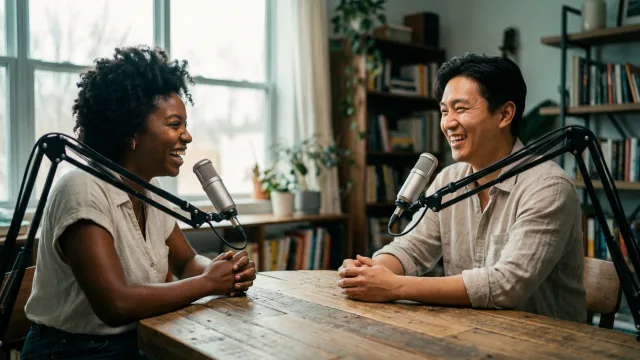
USB mics plug straight into your computer and include everything you need — perfect for solo or two-person shows. XLR mics need a separate audio interface but scale to bigger, multi-mic setups. Several picks above do both, so you can start on USB and add XLR later without rebuying.
Dynamic vs condenser
For most home rooms, go dynamic. Dynamic mics ignore background noise and echo, so you sound clean without acoustic treatment. Condensers capture more detail but hear everything — choose one only if your room is quiet and soft-furnished.
The thing nobody tells you
Your room matters more than the last $50 of mic. A mid-range dynamic in a quiet, carpeted room beats a premium mic in an echoey one. Get close to the mic, add soft furnishings, and you're most of the way there.
Frequently asked questions
USB or XLR mic for podcasting — which should I get?
Start with USB. A good USB mic plugs straight into your computer with no extra gear and sounds great for one or two people. Move to XLR (which needs an audio interface or mixer) only when you need multiple mics or studio-level control. Several picks here do both, so you never have to rebuy.
Do I need an audio interface with a USB microphone?
No. That's the whole point of USB — the interface is built in. You only need an interface for XLR mics.
Dynamic or condenser for podcasting?
For most home setups, dynamic. Dynamic mics ignore background noise and room echo, so you sound clean without treating the room. Condensers are more detailed but hear everything — the fan, the keyboard, the reverb — so they shine only in a quiet, soft-furnished space.
Is the Blue Yeti good for podcasting?
Yes, in the right room. It's a plug-and-play condenser that's easy to start with, but because it's a sensitive condenser it needs a quiet space with soft furnishings. In an echoey room, a dynamic mic will sound better.
How much should I spend on my first podcast mic?
You can start with a genuinely good mic for the price of a nice dinner — the Samson Q2U or Maono PD200X prove it. Spend more only when you have a reason: the Shure MV7+ earns its price with better sound and a longer runway. Don't buy a $20 no-name kit; it's a false economy.
Do I need a boom arm and pop filter?
Eventually, yes — but not on day one. A boom arm keeps the mic close to your mouth (which is the single biggest sound upgrade) and off the desk so it doesn't pick up bumps. A pop filter tames hard 'P' and 'B' sounds. Several dynamic picks here handle plosives well on their own, so add these when your budget allows.