The Best Microphones for Streaming
How we picked: we weigh the strongest independent expert reviews, real manufacturer specs, and thousands of verified owner reviews, then name one clear pick per budget and use case. No fake lab tests, and we say plainly what we’d skip. Prices change, so we link out for today’s. Last checked 2026-07-31.
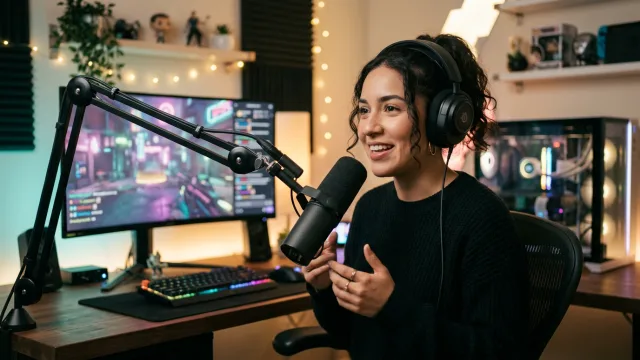
On stream, your voice is the show — viewers forgive a rough camera long before they forgive audio they have to strain to hear. The right mic sounds close and clean and, just as importantly, ignores your keyboard, your room, and your PC fans. We picked six that streamers actually run, from a plug-and-play budget hero to the broadcast standard, sorted by budget and use case. Before you buy anything, it's worth reading <a href="/why-your-microphone-sounds-bad">why your microphone sounds bad</a> — most audio problems are free to fix.
 🦉 #1 PICK
Shure MV7+
The mic that makes casual viewers assume you're a pro.
The 6 top picks
Shure MV7+
Best overallBest for: Streamers who want broadcast-grade voice with USB simplicity and XLR room to grow.
The MV7+ gives you that warm, close, radio-ready sound that makes a stream feel professional, and its dynamic capsule rejects keyboard clack and room echo. It runs USB for plug-and-play and XLR once you add a mixer, so it scales with your setup. Onboard processing and a headphone jack are built in.
- Warm, broadcast-style dynamic sound
- USB and XLR in one
- Rejects keyboard and room noise
- Costs more than entry mics
- Best a few inches from your mouth
🦉 Owl's take: The mic that makes casual viewers assume you're a pro.
HyperX QuadCast S
Best for streamersBest for: Streamers who want a striking on-camera mic with built-in RGB and a tap-to-mute top.
The QuadCast is a streamer favorite for a reason: it looks fantastic on camera with customizable RGB, has a built-in shock mount and pop filter, and a tap-to-mute sensor on top you'll use constantly. It's a condenser, so it wants a reasonably quiet room, but for a treated battlestation it sounds full and present.
- Eye-catching RGB and clean look on camera
- Tap-to-mute sensor and gain dial
- Built-in shock mount and pop filter
- Condenser picks up more room noise
- Larger footprint on a busy desk
🦉 Owl's take: The mic built for being seen as much as heard.
Blue Yeti
Best USB condenserBest for: Streamers and callers in a quiet room who want easy, full sound and multiple pickup patterns.
The Yeti has been the default desktop USB mic for years thanks to plug-and-play ease and switchable pickup patterns for solo, duo, or group use. In a quiet, soft-furnished room it sounds big and pleasant. Its sensitivity is the catch: it will happily capture a loud room, so it rewards a treated space.
- Plug-and-play with multiple patterns
- Full, pleasant sound
- Onboard gain, mute, and headphone jack
- Sensitive to room noise
- Fairly large and heavy
🦉 Owl's take: The easy, great-sounding USB condenser for a quiet setup.
Samson Q2U
Best budgetBest for: New streamers who want clean, room-rejecting audio for the least money.
The Q2U delivers a clean dynamic sound that ignores background noise, plus USB and XLR outputs and a headphone jack, for the price of a nice dinner. It's the honest budget pick that won't embarrass you next to pricier mics and can move to an XLR setup later.
- Clean dynamic sound on a budget
- USB and XLR both included
- Headphone monitoring built in
- Needs a stand or arm
- Plainer look on camera
🦉 Owl's take: The cheapest streaming mic we'd actually recommend.
RØDE PodMic USB
Best broadcast toneBest for: Streamers who want a rich, radio-broadcast voice and a tank-like build.
The PodMic USB has a deep, broadcast-forward tone that makes voices sound authoritative, with the same dual USB and XLR flexibility. It's built like a brick and includes onboard processing over USB. If you want that late-night-radio warmth on stream, this is the character pick.
- Deep, broadcast-style tone
- USB and XLR with onboard DSP
- Extremely rugged build
- Heavier, wants a sturdy arm
- Colored sound isn't for everyone
🦉 Owl's take: Rich, radio-style voice in a nearly indestructible body.
RØDE NT-USB+
Best for detailed voiceBest for: Just Chatting and voice-forward streamers in a treated room who want crisp, detailed audio.
The NT-USB+ is a studio-grade USB condenser with detailed, articulate sound and RØDE's onboard APHEX processing for compression and de-essing right in the mic. In a quiet, treated space it's crisp and professional. Like any condenser, it wants that quiet room to shine.
- Crisp, detailed studio sound
- Onboard APHEX processing
- Compact with headphone monitoring
- Condenser needs a quiet room
- Pricier than dynamic budget picks
🦉 Owl's take: Studio-condenser detail with processing baked in.
Compare all 6
| Pick | Best for | Type | Connection | Standout | |
|---|---|---|---|---|---|
| Shure MV7+ | Best overall | Dynamic | USB + XLR | Grows USB→XLR | Check ↗ |
| HyperX QuadCast S | Best for streamers | Condenser | USB | RGB + tap-mute | Check ↗ |
| Blue Yeti | Best USB condenser | Condenser | USB | 4 pickup patterns | Check ↗ |
| Samson Q2U | Best budget | Dynamic | USB + XLR | Value | Check ↗ |
| RØDE PodMic USB | Best broadcast tone | Dynamic | USB + XLR | Broadcast tone | Check ↗ |
| RØDE NT-USB+ | Best for detailed voice | Condenser | USB | Onboard DSP | Check ↗ |
How we choose (and why we don't fake lab tests)
Plenty of sites claim a lab they don't have. We won't. The Gear Owl reads the strongest independent expert reviews, the real manufacturer specs, and thousands of verified owner reviews, then distills them into one clear pick per budget and use case. When a product shines only in specific conditions, we say so. And we link out for live prices, because a price printed today is wrong tomorrow — you deserve the real number, not a stale one.
What we'd skip (and why)
Being honest about what not to buy is half the value of a guide. These come up a lot — we'd pass.
How to choose
Dynamic beats condenser for most streamers
Unless your room is quiet and treated, a dynamic mic is the move: it hears your voice up close and ignores the fans, clacks, and echo a condenser would broadcast. Our top picks lean dynamic on purpose. For the full rundown of USB options, see our USB microphone guide.
Get an arm and get close
A boom arm keeps the mic a few inches from your mouth (where dynamics sound best) and off the desk so you're not thumping it. It also clears the shot. It's the cheapest upgrade to your sound after the mic itself.
Growing into a full rig?
If you're adding guests, a second mic, or live sound effects, a mixer changes everything — that's where our podcast equipment guide (RØDECaster and friends) picks up, and any USB+XLR mic here moves straight over.
Frequently asked questions
What's the best microphone for streaming?
For most streamers, the Shure MV7+ is the best overall: broadcast-quality dynamic sound that rejects room noise, with USB simplicity and XLR headroom. If you want a striking on-camera look, the HyperX QuadCast S is the streamer favorite; on a budget, the Samson Q2U is hard to beat.
Dynamic or condenser mic for streaming?
Dynamic for most setups. Dynamic mics reject background noise, keyboard clatter, and room echo, so you sound clean without treating your room. Choose a condenser like the Blue Yeti or RØDE NT-USB+ only if your space is quiet and soft-furnished.
Is a USB mic good enough for streaming?
Absolutely. Modern USB mics like the MV7+, QuadCast, and Q2U sound excellent and plug straight into your PC. XLR only becomes necessary when you add multiple mics or a mixer, and several picks here do both so you can upgrade later.
Do I need a boom arm and pop filter?
A boom arm is strongly recommended — it positions the mic close to your mouth and off the desk, which improves sound and clears your camera frame. A pop filter helps with hard P and B sounds; some mics, like the QuadCast, build one in.
How do I stop my mic picking up keyboard and background noise?
Use a dynamic mic, get close to it, and lower the gain so it only hears you up close. Adding a noise gate or RTX/Krisp-style noise suppression in your streaming software cleans up the rest. This is why we lead with dynamic picks for streaming.