The Best Studio Headphones Under $100
How we picked: we weigh the strongest independent expert reviews, real manufacturer specs, and thousands of verified owner reviews, then name one clear pick per budget and use case. No fake lab tests, and we say plainly what we’d skip. Prices change, so we link out for today’s. Last checked 2026-07-30.
You don't need to spend a fortune to get flat, honest sound for tracking vocals or mixing a project. The picks below are proven studio workhorses that pros actually reach for, each chosen for a specific job. We focused on real durability, comfort for long sessions, and sound you can trust rather than bass-hyped consumer tuning.
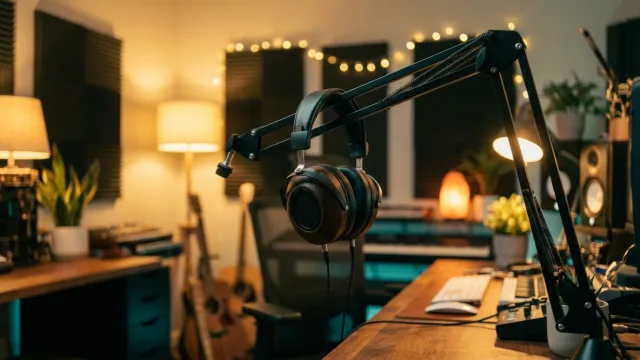 🦉 #1 PICK
Audio-Technica ATH-M40x
The safest all-rounder in the category, and flatter than the famous M50x.
The 7 top picks
Audio-Technica ATH-M40x
Best overallBest for: Anyone who wants one closed-back pair that does tracking, editing, and everyday listening well.
The M40x is tuned flatter than its pricier M50x sibling, which actually makes it a better reference for honest monitoring. The detachable cables (coiled and straight in the box) and folding, swiveling earcups make it a durable everyday tool. Isolation is solid enough for recording vocals without headphone bleed.
- Flat, honest tuning that's great for reference
- Detachable cables plus coiled and straight included
- Folding, road-ready build
- Clamp is firm out of the box
- Earpads wear out and need replacing over time
🦉 Owl's take: The safest all-rounder in the category, and flatter than the famous M50x.
Audio-Technica ATH-M20x
Best budgetBest for: Beginners and second-pair buyers who want real studio sound for the least money.
The entry point to Audio-Technica's respected M-series, the M20x delivers clean, reasonably balanced closed-back sound at a price that's hard to argue with. The cable is fixed rather than detachable, but the isolation and comfort punch well above the cost. A great first pair or a spare for guest musicians.
- Excellent value for the price
- Good isolation for tracking
- Comfortable for longer sessions
- Fixed, non-detachable cable
- Slightly recessed detail versus the M40x
🦉 Owl's take: Legit studio sound for near-throwaway money.
AKG K240 Studio
Best for mixingBest for: People who mix and edit and want a wide, natural soundstage instead of a sealed-in feel.
A studio staple for decades, the semi-open K240 trades some isolation for a more open, spacious presentation that many find easier to mix on for long stretches. The self-adjusting headband and light clamp make it comfortable for marathon editing days. Because it leaks sound, it's best kept away from live mics.
- Semi-open sound is spacious and natural
- Very comfortable for long sessions
- Detachable cable via mini-XLR
- Leaks sound, not for tracking near mics
- Benefits from a little extra amplification to shine
🦉 Owl's take: A long-serving semi-open classic that's easy on the ears for mixing.
Sony MDR-7506
Best for tracking & podcastingBest for: Podcasters, engineers, and video folks who need a detailed, sealed pair for capture work.
You'll spot the 7506 in broadcast booths and edit bays everywhere for good reason. Its bright, detailed presentation makes flaws in a recording easy to hear, which is exactly what you want when catching mouth noise or plosives. The coiled cable and folding design suit run-and-gun and studio work alike.
- Revealing detail that surfaces recording issues
- Trusted broadcast and field standard
- Coiled cable and folding build
- Bright tuning can be fatiguing over hours
- Fixed cable and pads that flake with age
🦉 Owl's take: The industry-standard 'catch every flaw' headphone for capture.
Sennheiser HD 280 Pro
Best isolationBest for: Drummers, loud-room trackers, and anyone who needs to block the outside world.
The HD 280 Pro is known for strong passive isolation, making it a favorite for tracking in noisy environments and for cutting bleed on loud sources. The sound is fairly neutral with a slightly rolled-off top, and the parts are user-replaceable, so a worn pair is easy to refresh instead of replace.
- Excellent passive noise isolation
- Neutral, no-nonsense tuning
- Replaceable pads, headband, and cable
- Tight clamp force early on
- Coiled cable is fixed at the earcup
🦉 Owl's take: Sealed-tight isolation with fully replaceable parts.
Samson SR850
Best open-back on a budgetBest for: Bedroom producers who want an open-back mixing feel without spending much.
Often recommended as a giant-killer, the semi-open SR850 offers a surprisingly wide soundstage for its very low price. The velour pads and self-adjusting band are comfortable for long editing sessions. It's not built like a tank and it leaks sound, but as an inexpensive window into open-back mixing it's tough to beat.
- Wide, open soundstage for the money
- Comfortable velour pads
- Extremely affordable
- Plasticky, less durable build
- Leaks sound and offers little isolation
🦉 Owl's take: A shockingly cheap way to try open-back mixing.
Beyerdynamic DT 240 Pro
Best compact & portableBest for: Mobile creators who want a small, tough closed-back pair for on-the-go monitoring.
The DT 240 Pro packs Beyerdynamic's studio pedigree into a compact, closed-back design that's easy to toss in a bag. It's fairly balanced with a touch of low-end warmth, and its low impedance means it drives loud enough straight from a laptop or interface. A practical choice for location recording and reference on the move.
- Small, sturdy, and travel-friendly
- Easy to drive from laptops and interfaces
- Detachable cable
- Smaller earcups feel on-ear for some
- Isolation is good but not maximum
🦉 Owl's take: Studio reference that actually fits in your bag.
Compare all 7
| Pick | Best for | Design | Connection | Impedance | |
|---|---|---|---|---|---|
| Audio-Technica ATH-M40x | Best overall | Closed-back | Detachable 3.5mm | 35 ohm | Check ↗ |
| Audio-Technica ATH-M20x | Best budget | Closed-back | 3.5mm (fixed) | 47 ohm | Check ↗ |
| AKG K240 Studio | Best for mixing | Semi-open | Detachable (mini-XLR) | 55 ohm | Check ↗ |
| Sony MDR-7506 | Best for tracking & podcasting | Closed-back | 3.5mm (fixed, coiled) | 63 ohm | Check ↗ |
| Sennheiser HD 280 Pro | Best isolation | Closed-back | 3.5mm (fixed, coiled) | 64 ohm | Check ↗ |
| Samson SR850 | Best open-back on a budget | Semi-open | 3.5mm (fixed) | 32 ohm | Check ↗ |
| Beyerdynamic DT 240 Pro | Best compact & portable | Closed-back | Detachable 3.5mm | 34 ohm | Check ↗ |
How we choose (and why we don't fake lab tests)
Plenty of sites claim a lab they don't have. We won't. The Gear Owl reads the strongest independent expert reviews, the real manufacturer specs, and thousands of verified owner reviews, then distills them into one clear pick per budget and use case. When a product shines only in specific conditions, we say so. And we link out for live prices, because a price printed today is wrong tomorrow — you deserve the real number, not a stale one.
What we'd skip (and why)
Being honest about what not to buy is half the value of a guide. These come up a lot — we'd pass.
How to choose
Closed-back vs open-back
Closed-back seals sound in and out, so it isolates well and won't bleed into a microphone. That makes it the right pick for tracking vocals, podcasting, and drumming. Open and semi-open designs let air through for a wider, more natural soundstage that many prefer for mixing and long editing sessions, but they leak sound and shouldn't be used near a live mic.
Impedance and whether you need an amp
Most headphones on this list are low impedance (around 30 to 65 ohms) and will get plenty loud from a laptop, phone, or audio interface headphone jack. You generally only need a dedicated headphone amp for higher-impedance models (250 ohms and up), which are rare under $100.
Why studio (flat) beats consumer (bass-boosted)
Consumer headphones are voiced to sound exciting, usually with boosted bass and sparkly treble. That's fun for listening but misleading for work: you'll make mix decisions to counteract the coloration, and your mixes will fall apart on other systems. Studio headphones aim for a flatter, more honest response so what you hear is closer to what's actually recorded.
Frequently asked questions
Can you really get good studio headphones under $100?
Yes. Several models on this list, like the Sony MDR-7506 and Audio-Technica M-series, are longtime professional standards used in real studios and broadcast booths. Spending more buys refinement and comfort, not a different league of accuracy.
Should I get closed-back or open-back for recording?
Closed-back. When you record with a live microphone, open-back headphones leak sound that the mic can pick up. Use a sealed closed-back pair for tracking, and save open or semi-open designs for mixing and editing where isolation doesn't matter.
Do I need a headphone amp for these?
For almost all of these picks, no. They're low impedance and run loud from a laptop, phone, or audio interface. An amp mainly matters for high-impedance headphones, which are uncommon in this price range.
Can I use one pair for both tracking and mixing?
You can, and a balanced closed-back like the ATH-M40x is the most versatile single choice. If mixing is your main focus, a semi-open pair such as the AKG K240 Studio gives a more open, natural soundstage that many find easier to work on for long stretches.
Are studio headphones good for everyday music listening?
They can be, but they're tuned to be honest rather than exciting, so bass-heavy genres may sound leaner than you're used to. If you want thumpy, hyped sound for casual listening, consumer headphones will feel more fun, at the cost of accuracy.